
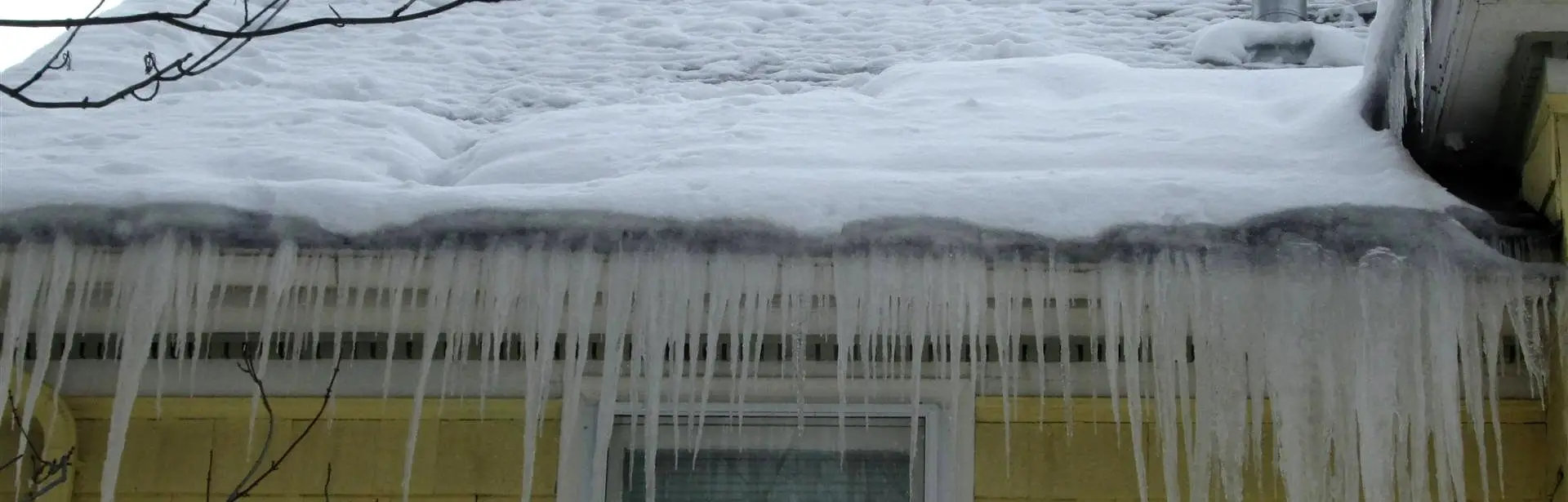
Vermont’s long winters and bitterly cold temperatures can affect our homes. Hundreds of Vermont houses suffer water damage due to ice damming in the winter, and many people won’t even notice until it’s too late.
WHAT IS ICE DAMMING?
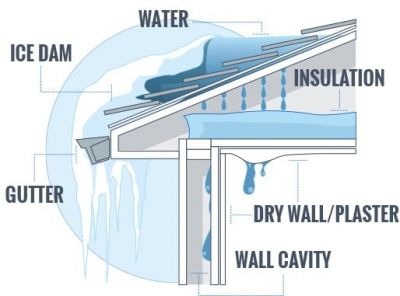 Ice damming occurs when enough heat escapes from your attic to melt snow on the roof. This snowmelt freezes as it reaches the roof edge (eaves), forming a dam. The rest of the water backs up onto and under the roofing materials, allowing it to enter the house. Once inside, water can ruin your insulation, ceiling, wood framing, drywall, and even flooring. Preventing ice damming could save you thousands of dollars in home repairs, but first, you need to know the signs.
Most ice dams develop on the edge of your roof, but they may also form in other locations, depending on the slope, orientation, and style of your roof. Keep an eye on the following:
- Look closely at the icicles around the exterior of your house. Icicles can be a precursor to ice dams. Icicles are formed by snow melting off the roof and refreezing at the eaves. The bigger the icicles, the bigger the ice dam. Depending on their location and size, icicles may pose a hazard if they fall. Whenever possible, remove icicles from the exterior of your home, and do not stand directly beneath them. If you cannot safely reach the icicles from the ground, consider hiring a contractor to remove them.
- Check for water stains or moisture in your attic or along the exterior walls of your house. Water stains or humidity may indicate that an ice dam has formed and water has penetrated the roof membrane.
If you decide to break off the ice yourself, do it in small chunks by using a blunt object, like the head of a hammer. Otherwise, you risk putting a hole in your roof. Your house is already under stress because of the ice. Don’t make matters worse by beating it up!
Another option is to use calcium chloride. Fill a stocking with calcium chloride and lay it on the ice, or use calcium chloride tablets. This method won’t eliminate all ice, but it can create a path for snowmelt to drain. Remember that using a ladder in snowy and icy conditions can be dangerous. If you cannot safely reach the roof, consider hiring a contractor.
If you spot damage on your roof, get it repaired as soon as the average temperature is forty degrees or higher. Roof repairs can be done during the winter, but we don’t advise it unless water is getting into your house. If you can wait, get it done in early spring before mud season is in full swing.
- Rake Your Roof. The easiest and cheapest way to prevent ice damming is to keep your roof clear of snow. Most roof rakes start at about $35, making them a solid investment when they can save you thousands in rot repair. Even a slight dusting of snow can cause ice damming, so get out there every time it snows.
- Better Insulation. If you are losing heat through the roof, you need better insulation in your attic. Non-insulated ductwork from a bathroom fan can draw heat from the house into the attic. If you have a cathedral ceiling and don’t have an attic space, you can try to solve the problem by creating better ventilation between the roof sheathing and the insulation. If that doesn’t help, your next option is to add insulation to the roof, inside the roof, or on the ceiling. Give us a call to evaluate the situation and recommend next steps.
- Heat Tape. Installing heat tape in a triangular pattern along the edge of your roof may not melt all the ice, but it will create a path for snowmelt to drain off the roof. If you decide to go this route, we recommend having it installed by a professional and set up on a switch. You only need to use it when there is snow on the roof, so that a switch will keep your energy costs down. If you have gutters, we recommend installing heat tape inside them and in the downspout. If you have a metal roof, a hot edge system is the best option because it heats the lower portion of the roof, reducing the risk of complete damming.
Ice damming is a fact of life here in Vermont. It’s as much a part of winter as sleigh rides and hot chocolate, but a few preventative measures can go a long way toward keeping winter from ruining your spring.



0 thoughts on “How to Prevent Ice Damage in Vermont”
I’m looking for professional ice dam prevention on a metal roof in Ludlow, VT. Can you assist?