
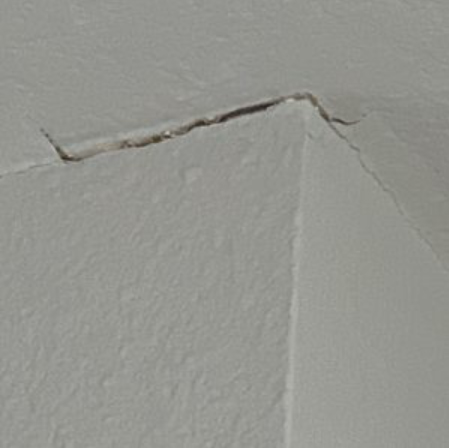
In many homes built with trusses, you may notice cracks along the corners at the tops of the exterior walls. In homes with vaulted ceilings, you may have a recurring crack right at the peak of the ceiling, and this can happen with either trusses (scissor trusses) or with rafters.
When it comes to top corner cracks and separations on a roof constructed with trusses, this is called “Truss Uplift”.
Because the truss is built to act as a single unit, all its parts move and change together. In the winter, the top of the truss becomes cold and dry, while the insulated bottom chord remains warm and moist. This causes uneven movement in the truss members and pulls the bottom chord up, separating the ceiling drywall from the walls. Don’t worry, though, this is just cosmetic. Solutions for this include creative masking ideas, such as crown molding fastened only to the ceiling, or similar setups that allow the ceiling to move while visually staying the same physically.
When you have a vaulted ceiling, and it cracks in the middle, if it’s a scissor truss or a rafter-framed roof, the crack happens for similar reasons.
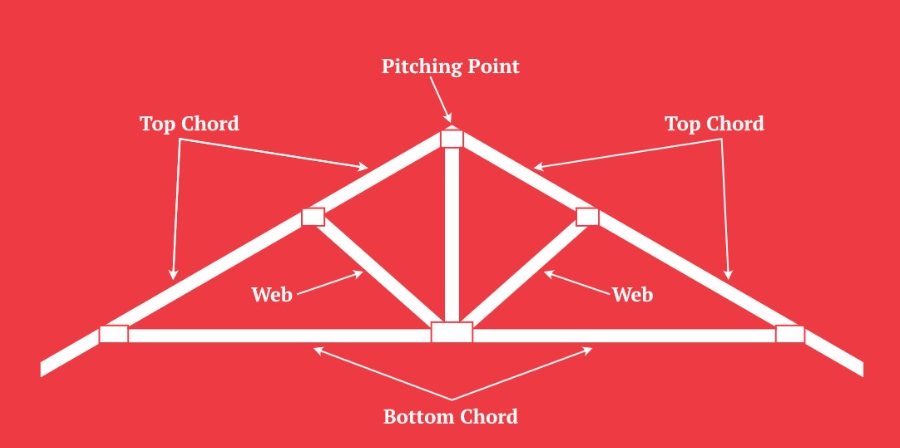
The main reason is the nature of a pitched roof and how the forces on the roof (including the weight of the roof itself) are transferred to the load-bearing walls. Your standard roof framing consists of two rafters and a rafter tie, forming a triangle. The rafters create your pitch, and their shape naturally tends to push your exterior walls apart. The rafter tie holds your walls together and resists outward forces. Fun fact: if a rafter tie moves into the upper third of the roof, it becomes a collar tie and no longer has the same effect as a rafter tie.
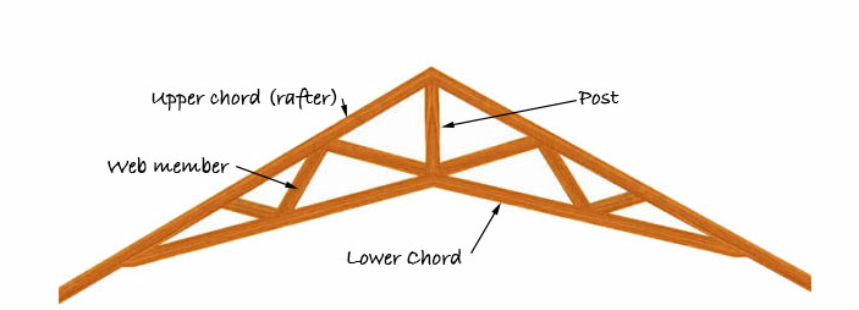
That crack at the peak is because, without a rafter tie, your roof and walls have a greater degree of deflection, to the point that the drywall joint can’t flex enough to hide it and starts to separate. This issue will be the worst when there is snow on the roof, and things like solar panels can make the problem even worse (providing your roof is engineered to handle them). There are solutions to this problem, but we’ll save that for another post!